
Meal replacement shakes can be useful during treatment when shopping, cooking, chewing, or appetite are all limited at the same time, but the label alone does not tell you whether a product truly fits your needs.
Some shakes behave like convenience meals, some look more like high-calorie snacks, and some overlap with oral nutrition supplements. The practical fit depends on calories, protein, volume, sweetness, and symptom tolerance.
This article is for general information. It does not replace advice from your oncology team. If symptoms change, become hard to manage, or are stopping you from eating or drinking, speak with a clinician promptly.
Why this matters during treatment
For some people a shake is the difference between getting something in and skipping a meal. For others, a thick sweet drink worsens nausea, reflux, bloating, or early fullness.
That means the question is less “Can I drink them?” and more “Which type, how much, and when?”
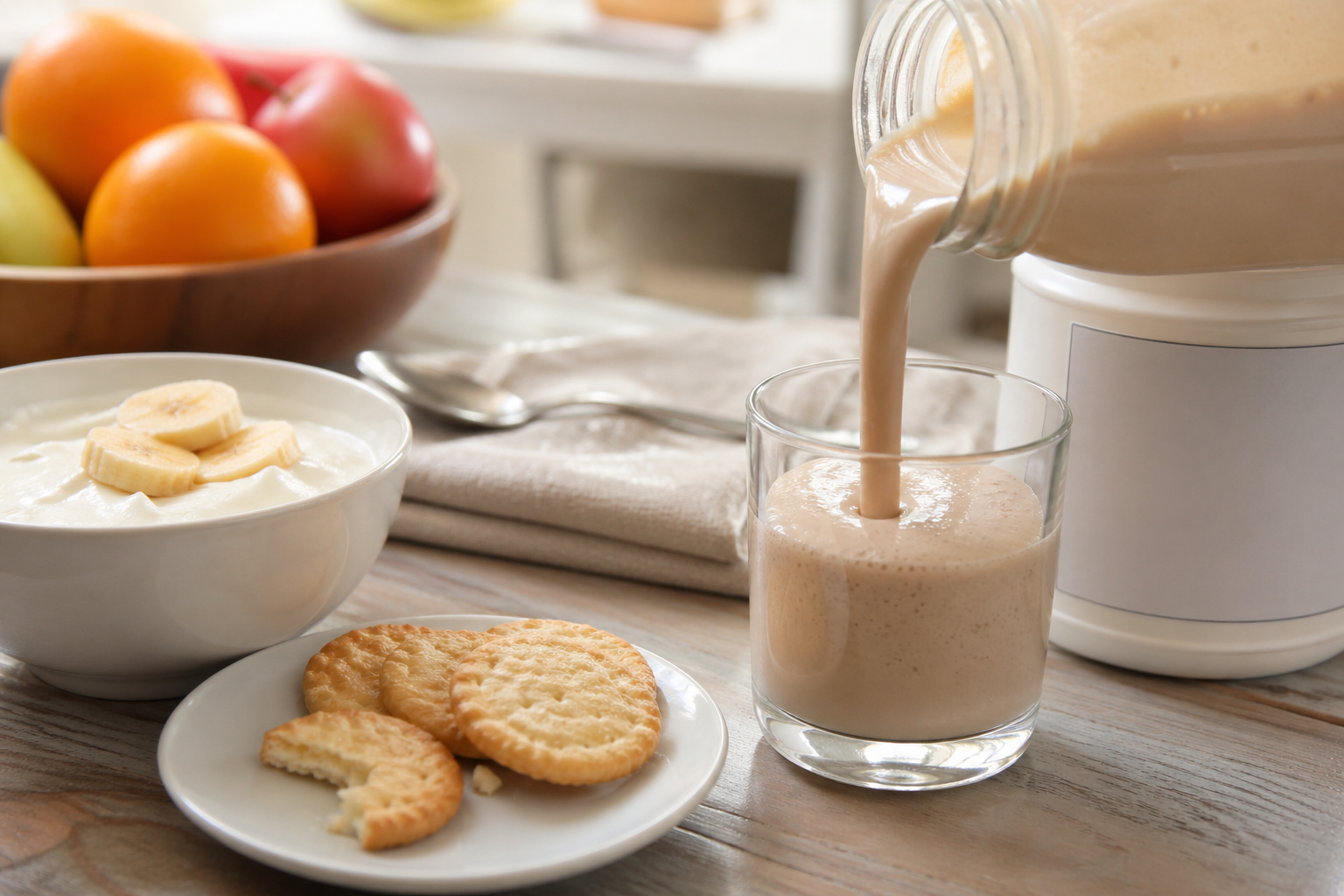
AI-generated image created with ChatGPT / OpenAI DALL·E. For illustrative purposes only.
What often helps in practice
What often works is using shakes strategically rather than automatically.
- Compare calories, protein, serving size, and total bottle volume before buying.
- Use them when food prep, chewing, or fatigue is the main barrier—not only when appetite disappears completely.
- Sip slowly, chill them, or split one serving into smaller portions if fullness or nausea is a problem.
- Keep watching how they affect reflux, diarrhea, or blood sugar if those are already active issues.
The best nutrition plan on a difficult day is usually the one that still feels realistic enough to repeat.
What can make it harder or deserves extra caution
A shake stops being helpful when it consistently worsens symptoms or crowds out all other intake without improving the overall day.
- Bloating, reflux, diarrhea, or nausea that is clearly worse with a given product.
- Assuming any product labeled meal replacement is nutritionally complete enough for sole use.
- Using only shakes for days while weight, strength, or hydration continue to slide.
When to ask for more support
Ask for help if drinks are becoming most of your intake, if no product is tolerable, or if symptoms such as diabetes, kidney disease, or swallowing problems complicate the choice.
Bring the exact product label and how much you manage per day. That lets a dietitian or clinician judge whether you need a different formula, oral nutrition supplements, or a higher-support plan.
When extra support makes sense A shake can be a useful bridge, but it should not hide worsening malnutrition or swallowing problems.
Frequently asked questions
Sometimes they overlap, but not always; nutritional completeness and protein-calorie density vary widely.
Usually when food prep, chewing, fatigue, or low appetite are limiting regular meals.
Try colder serving temperatures, smaller portions, or a different formula rather than forcing the same product.
Only with clinician or dietitian guidance if that pattern lasts more than a short time.
Sources
- ESPEN practical guideline: Clinical Nutrition in cancer
- NCI: Eating Hints – Before, during, and after cancer treatment
- NCI: Nutrition During Cancer
- Cancer.Net: Drinking and Eating Changes
Medical disclaimer: This article is for general informational purposes only. It does not constitute medical advice and is not a substitute for professional guidance from a qualified clinician. If you have questions about your own symptoms or treatment, speak with your oncology team or a registered dietitian.