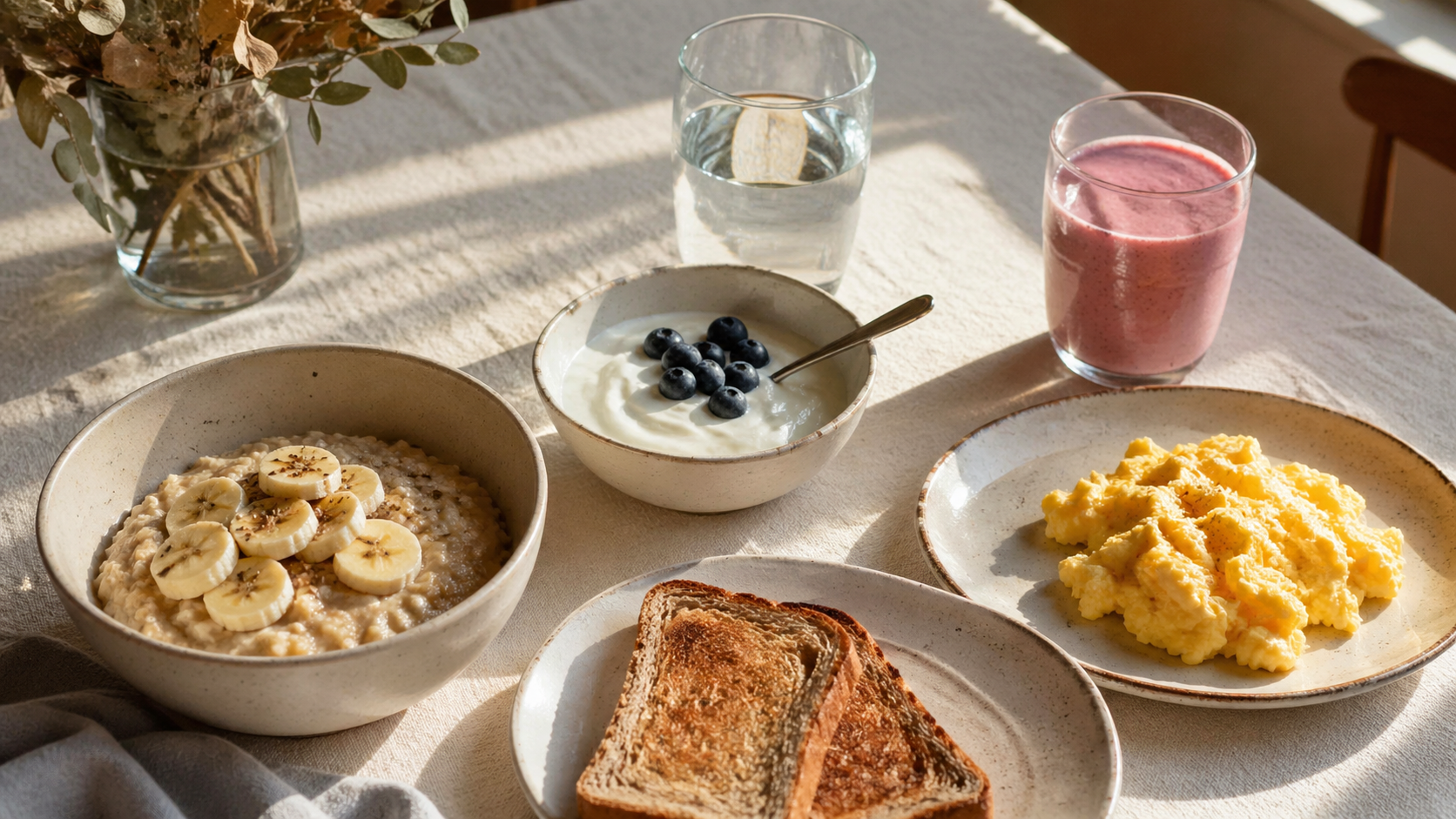
A practical guide to easy breakfast ideas during cancer treatment with a focus on easier eating, drinking, symptom support, and when to ask for more help.
During treatment, the best next step is usually the one that lowers effort, protects hydration and protein intake, and makes symptoms easier to describe clearly to your care team.
This article is for general information. It does not replace advice from your oncology team. If symptoms change, become hard to manage, or are stopping you from eating or drinking, speak with a clinician promptly.
Why this matters during treatment
Morning can be the easiest eating window for some people, especially before fatigue, nausea, taste changes, or treatment stress build later in the day.
Breakfast also does not need to look traditional. The right breakfast is the one you can manage, whether that is toast, yogurt, soup, eggs, porridge, or leftovers.
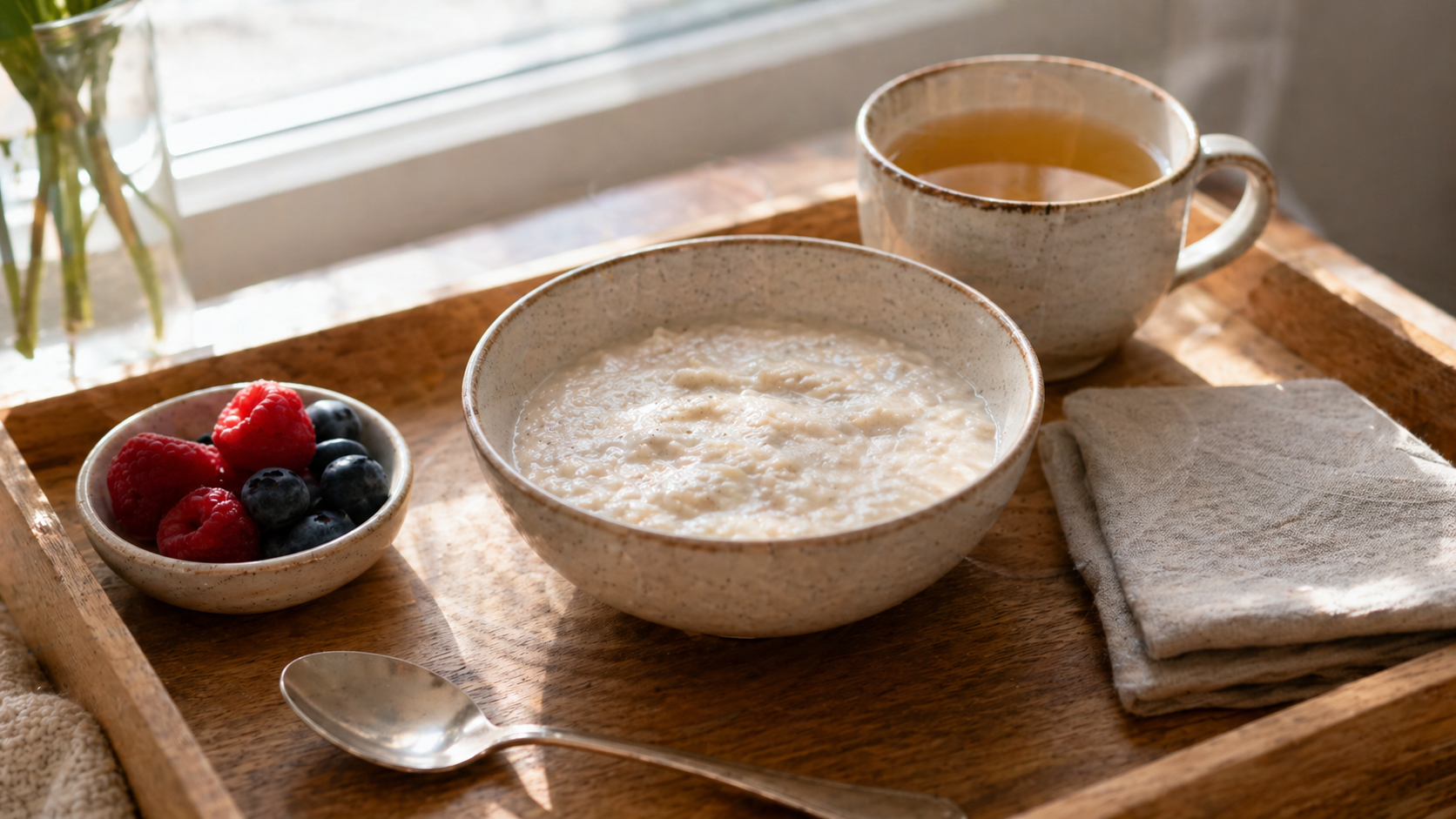
AI-generated image created with ChatGPT / OpenAI DALL·E. For illustrative purposes only.
What often helps in practice
Build breakfast around low effort plus one source of protein when possible.
- Use your best appetite window, even if breakfast becomes the most useful meal of your day.
- Pair an easy carbohydrate with protein, such as toast and egg, porridge made with milk, yogurt with oats, or a smoothie with milk or nut butter.
- Keep a few five-minute options visible and ready so mornings do not depend on cooking energy.
- Use cold or soft foods if smells, mouth soreness, or swallowing issues make hot breakfasts harder.
Breakfast only has to be possible, not perfect.
What can make it harder or deserves extra caution
Breakfast matters even more when it is your only reliable eating window.
- Skipping the part of the day when appetite is best and trying to “make up for it later.”
- Only having coffee or tea all morning and no real food or fluids.
- Nausea, mouth pain, or swallowing difficulty that is stopping even small breakfasts.
When to ask for more support
Tell your team if mornings are your only realistic chance to eat and that window is shrinking too.
That pattern can be a useful clue for medication timing, nausea support, mouth care, or dietitian help with higher-protein breakfast options you can still tolerate.
When extra support makes sense If mornings are consistently the only time you can eat, make that window count and tell your team if even that intake is falling.
Frequently asked questions
No. Soup, leftovers, sandwiches, rice, noodles, or anything else that is manageable can count. The priority is getting intake in, not following breakfast rules.
Yogurt, milk, eggs, cottage cheese, smoothies, nut butter, cheese, and fortified drinks are often practical because they need little preparation.
Cold foods are often easier because they usually smell less. Try yogurt, overnight oats, chilled smoothies, cold cereal, or toast with a simple topping.
Ask if breakfast is getting harder, the rest of the day is also poor, you are losing weight, or symptoms like nausea, mouth pain, or swallowing problems are limiting intake.
Sources
- NCI: Nutrition During Cancer
- NCI: Eating Hints: Before, During, and After Cancer Treatment
- Macmillan: Tips for managing eating problems
- Macmillan: Eating problems and cancer
Medical disclaimer: This article is for general informational purposes only. It does not constitute medical advice and is not a substitute for professional guidance from a qualified clinician. If you have questions about your own symptoms or treatment, speak with your oncology team or a registered dietitian.