
Fermented foods are not automatically good or bad during cancer treatment. The more useful question is whether a specific food is safe for your immune status, well tolerated by your gut, and realistic for your current symptoms.
Yogurt, kefir, kimchi, sauerkraut, kombucha, and similar foods are not all equivalent. Pasteurization, probiotic content, acidity, spice level, and how the food was prepared can all matter more than the word fermented on its own.
This article is for general information. During active treatment, especially if your immunity is low, your own oncology team may give stricter advice than general food guidance.
Why this matters during treatment
Cancer treatment can change bowel tolerance, mouth comfort, and infection risk. A food that normally feels easy may become irritating if you have diarrhoea, reflux, bloating, mouth soreness, or swallowing problems. If your white blood cell count is very low, food safety becomes a bigger issue too.
Fermented foods also overlap with the topic of probiotics. Some products contain live cultures or are explicitly labelled probiotic. That may be fine for some people, but not for everyone during treatment.
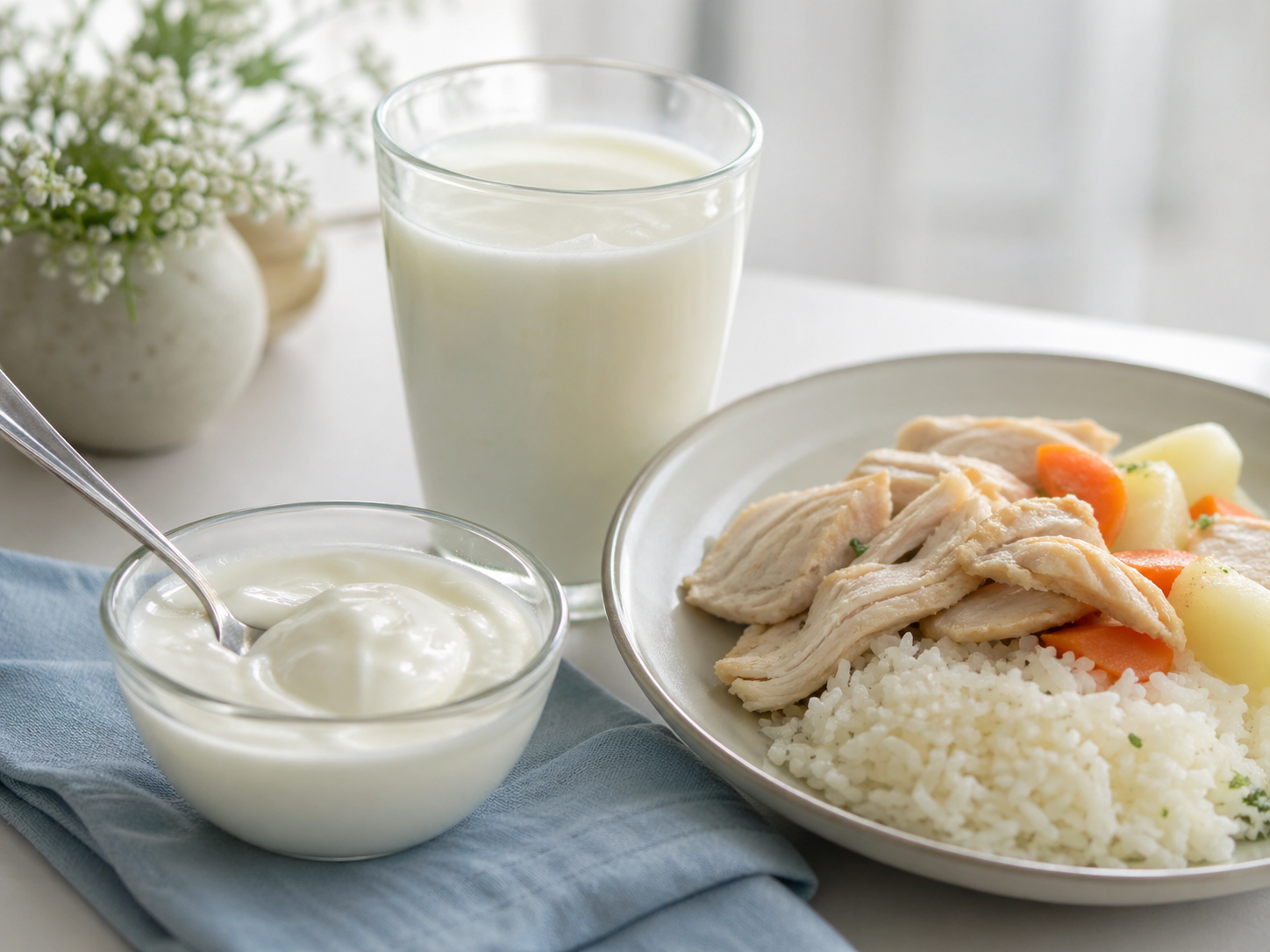
AI-generated image created with ChatGPT / OpenAI DALL·E. For illustrative purposes only.
What often helps in practice
If you want to include fermented foods, the safest approach is usually the simplest one.
- Start with foods your care team already considers safe for you.
- Choose commercially prepared products over homemade versions when food safety is a concern.
- Check whether a product is pasteurised and whether it is labelled probiotic or bio.
- Introduce small amounts first so you can judge tolerance.
- Stop and reassess if bloating, cramps, diarrhoea, reflux, or mouth irritation worsen.
During treatment, the best fermented food decision is usually the one that balances safety, tolerance, and simplicity rather than theory alone.
What can make it harder or deserves extra caution
Homemade or unpasteurised ferments deserve more caution when immunity is low. Very acidic or spicy products may also sting if you have mucositis, reflux, or diarrhoea. If you have been told you are neutropenic, are having high-dose chemotherapy, or have had a stem cell transplant, ask before using probiotic foods or supplements.
It is also worth separating regular fermented foods from concentrated probiotic products. Some teams are comfortable with certain foods and much more cautious with products marketed as probiotic.
When to ask for more support
Ask your oncology team or dietitian before adding fermented or probiotic foods if your immunity is very low, you have a stem cell or bone marrow transplant, you are having severe diarrhoea, or you have mouth or swallowing symptoms that already make eating difficult.
Frequently asked questions
No. Safety depends on your treatment phase, immune status, the exact product, whether it is pasteurised, and whether your gut is tolerating it well.
Think about food safety and tolerance first. In practice that means checking pasteurisation, avoiding risky products if your immunity is very low, and introducing small amounts.
Not always. Some fermented foods contain live cultures and some do not. Products labelled probiotic or bio deserve extra caution during periods of very low immunity.
Ask first if you have neutropenia, are having high-dose chemotherapy, had a stem cell transplant, or are already dealing with severe diarrhoea, reflux, mouth sores, or swallowing pain.