A practical guide to acid reflux during cancer treatment, foods that may be easier to tolerate with a focus on lower-pressure eating, gut comfort, hydration, and when to involve your care team.
During treatment, the best next step is usually the one that lowers effort, protects hydration and protein intake, and makes symptoms easier to describe clearly to your care team.
This article is for general information. It does not replace advice from your oncology team. If symptoms change, become hard to manage, or are stopping you from eating or drinking, speak with a clinician promptly.
Why this matters during treatment
Heartburn and reflux can flare during cancer treatment because eating patterns change, stomach emptying may slow, medicines may irritate the gut, and lying down after eating can feel worse.
The priority is protecting intake without ignoring red flags. Food changes can help, but persistent reflux may still need medication review.
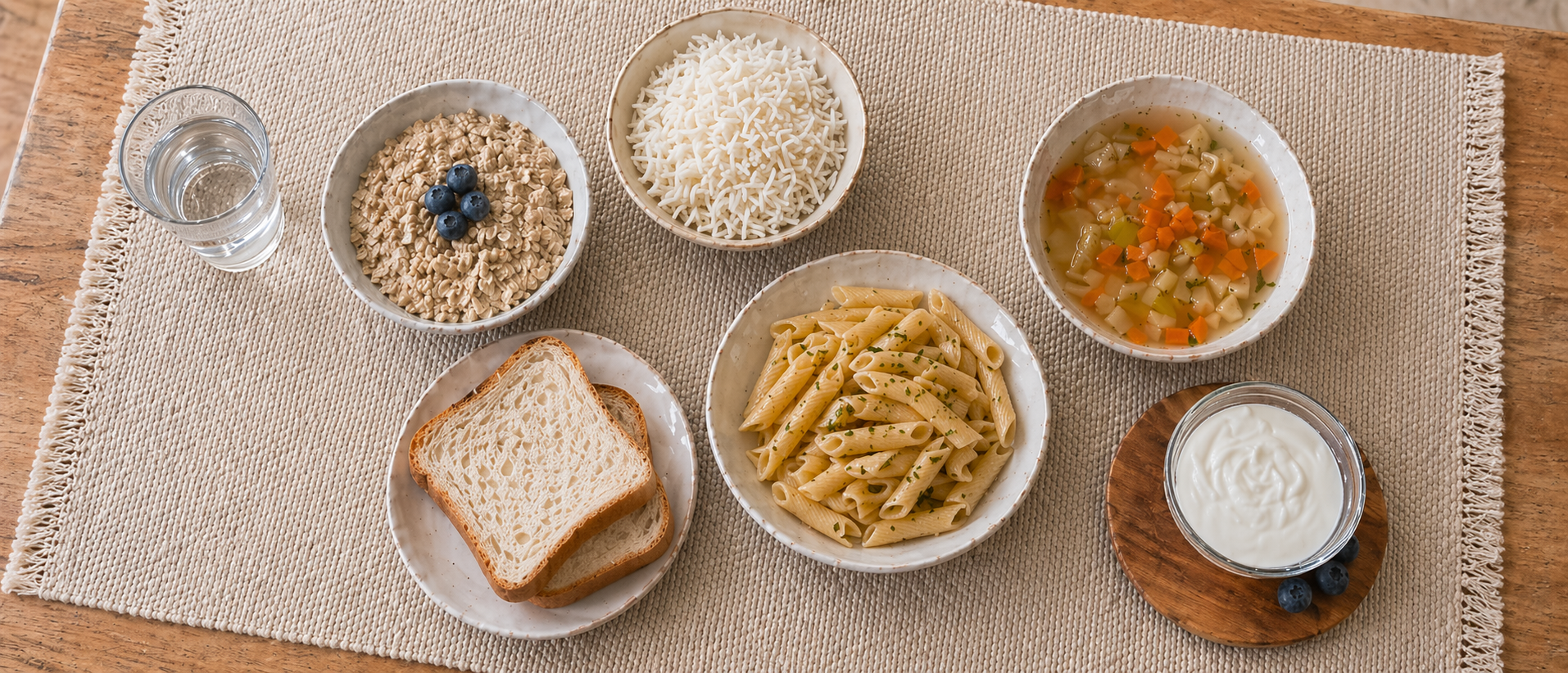
AI-generated image created with ChatGPT / OpenAI DALL·E. For illustrative purposes only.
What often helps in practice
Start with meal pattern and body position.
- Use smaller meals and a lighter evening intake instead of a few larger meals.
- Stay upright after eating and avoid lying flat soon after food if that clearly worsens symptoms.
- Choose lower-fat, less spicy, or less acidic foods if those are obvious triggers for you.
- Sip fluids between meals rather than taking large drinks with food if fullness and reflux tend to come together.
Gentler meal timing often helps more than chasing a long list of forbidden foods.
What can make it harder or deserves extra caution
Persistent reflux deserves more attention when it affects sleep, swallowing, or regular intake.
- Painful swallowing or a feeling that food is sticking.
- Black stools, vomiting blood, or vomit that looks like coffee grounds.
- Severe chest or upper abdominal pain, or reflux with ongoing vomiting.
When to ask for more support
Ask early if reflux is new, worsening, or interfering with sleep, medicines, or eating.
Your team may want to review medicines, mouth and swallowing symptoms, or whether another upper-gut problem is starting to overlap with reflux.
When extra support makes sense If reflux is increasing rather than settling, especially with swallowing pain or reduced intake, bring it back to your care team sooner rather than later.
Frequently asked questions
Many people do better with smaller, simpler meals such as toast, oats, rice, pasta, yogurt, soup, or other lower-fat foods that do not clearly trigger burning.
Yes. For many people, reflux is worse when they lie flat soon after eating, especially after larger meals.
Get prompt help if swallowing is painful, food is sticking, stools turn black, you vomit blood or coffee-ground material, or pain is severe.
Yes. Some medicines and treatment-related changes in appetite, stomach emptying, and meal timing can all make reflux worse.
Sources
- NCI: Nutrition in Cancer Care (PDQ®)
- Cancer.Net: Drinking and Eating Changes
- Cancer.Net: Swallowing Problems
- NHS: Why a gastroscopy may be done
Medical disclaimer: This article is for general informational purposes only. It does not constitute medical advice and is not a substitute for professional guidance from a qualified clinician. If you have questions about your own symptoms or treatment, speak with your oncology team or a registered dietitian.