
The gut microbiome is the community of microorganisms living in the digestive tract. During cancer treatment, that community can be affected by chemotherapy, antibiotics, reduced food intake, diarrhea, constipation, inflammation, and changes in routine eating.
That matters because the microbiome is linked with digestion, the gut lining, bowel comfort, and how predictable eating feels — but it should not be used as a catch-all explanation for every symptom.
This article is for general information. It does not replace advice from your oncology team. If symptoms change, become hard to manage, or are stopping you from eating or drinking, speak with a clinician promptly.
Why treatment can disturb the microbiome
Treatment can change what reaches the gut, how fast things move through it, and how inflamed or irritated the gut environment becomes. Antibiotics can add another layer by shifting microbial balance directly.
These changes do not always cause obvious symptoms, but they can sit in the background of bloating, bowel irregularity, reduced tolerance, or feeling that digestion is simply not behaving as usual.
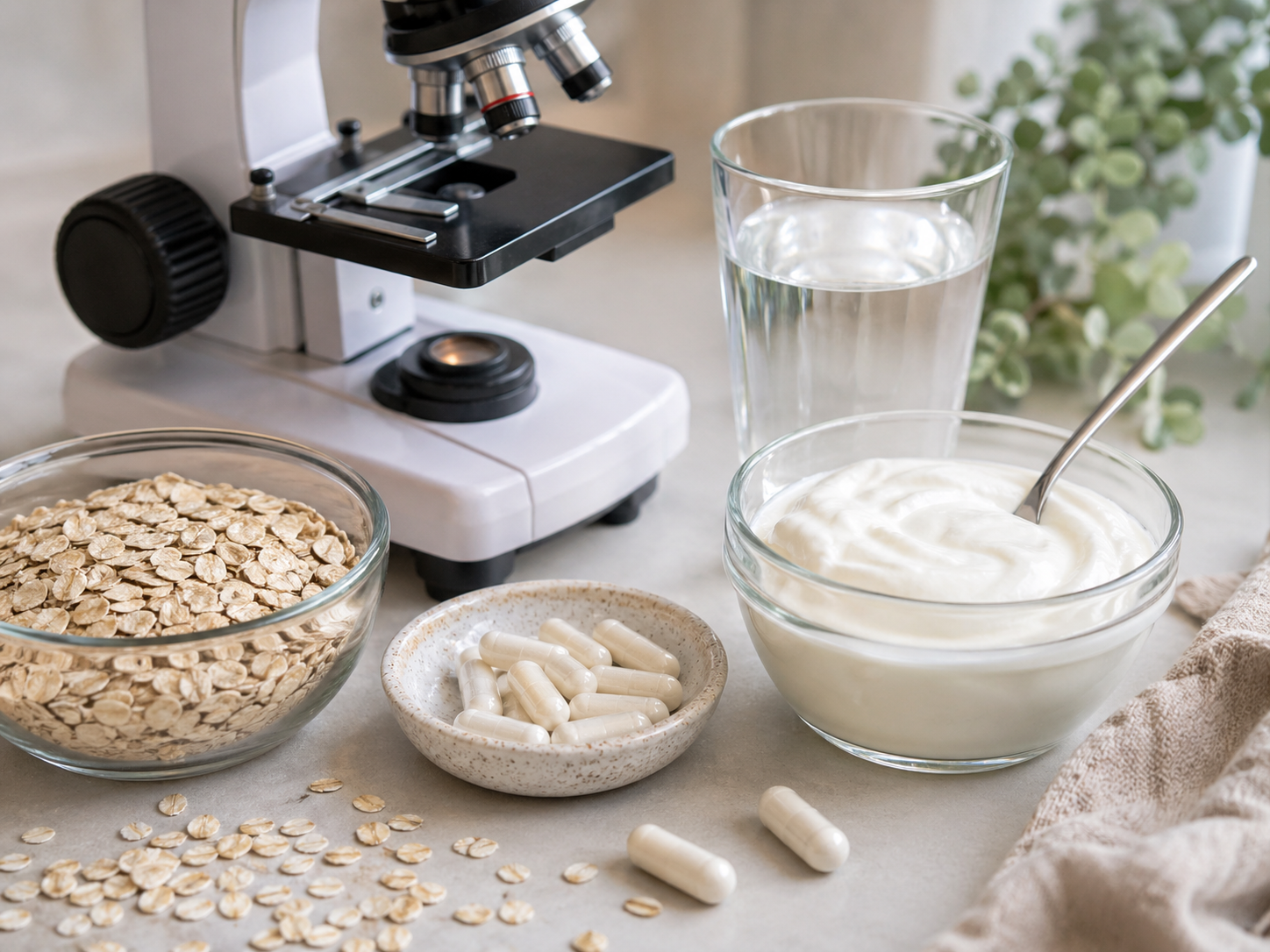
Why the microbiome is discussed in supportive nutrition
Supportive nutrition often has to work within the same system the microbiome lives in.
- Food intake shapes the gut environment, especially when variety and fiber intake change sharply.
- Bowel symptoms and appetite changes often influence each other rather than happening in isolation.
- Antibiotics, diarrhea, constipation, and low intake can all make eating feel less predictable.
- Microbiome-focused language is most useful when it helps explain complexity, not when it becomes a vague cure claim.
The microbiome matters during treatment, but it is part of the picture — not the whole picture.
What not to overclaim
Microbiome interest is high, but that does not mean every microbiome-targeting product is well matched to every person in treatment.
- Do not assume one symptom automatically means dysbiosis is the main issue.
- Do not assume prebiotics, probiotics, or fermented foods are always appropriate during active treatment.
- Do not let microbiome language distract from urgent symptom management such as dehydration, vomiting, pain, or swallowing difficulty.
When microbiome questions are worth raising
Bring them up when bowel symptoms keep recurring, antibiotics have changed the situation, or you are considering a probiotic or prebiotic product during treatment.
That lets your team keep the conversation grounded in safety, symptom pattern, and the rest of your nutrition plan.
Frequently asked questions
It is the collection of microorganisms living in and on the body, especially in the gut.
Yes. Treatment, antibiotics, low intake, bowel changes, and inflammation can all change the gut environment.
No. Some people feel clear bowel changes; others mainly notice that eating becomes less predictable or less comfortable.
Because it is closely linked with digestion, bowel comfort, and the gut environment that nutrition strategies have to work within.
Sources
- NIH ODS: Probiotics - Health Professional Fact Sheet
- NCCIH: Probiotics, the Microbiome, and Host Immune Response
- NCI: Nutrition in Cancer Care (PDQ®)
Medical disclaimer: This article is for general informational purposes only. It does not constitute medical advice and is not a substitute for professional guidance from a qualified clinician. If you have questions about your own symptoms or treatment, speak with your oncology team or a registered dietitian.