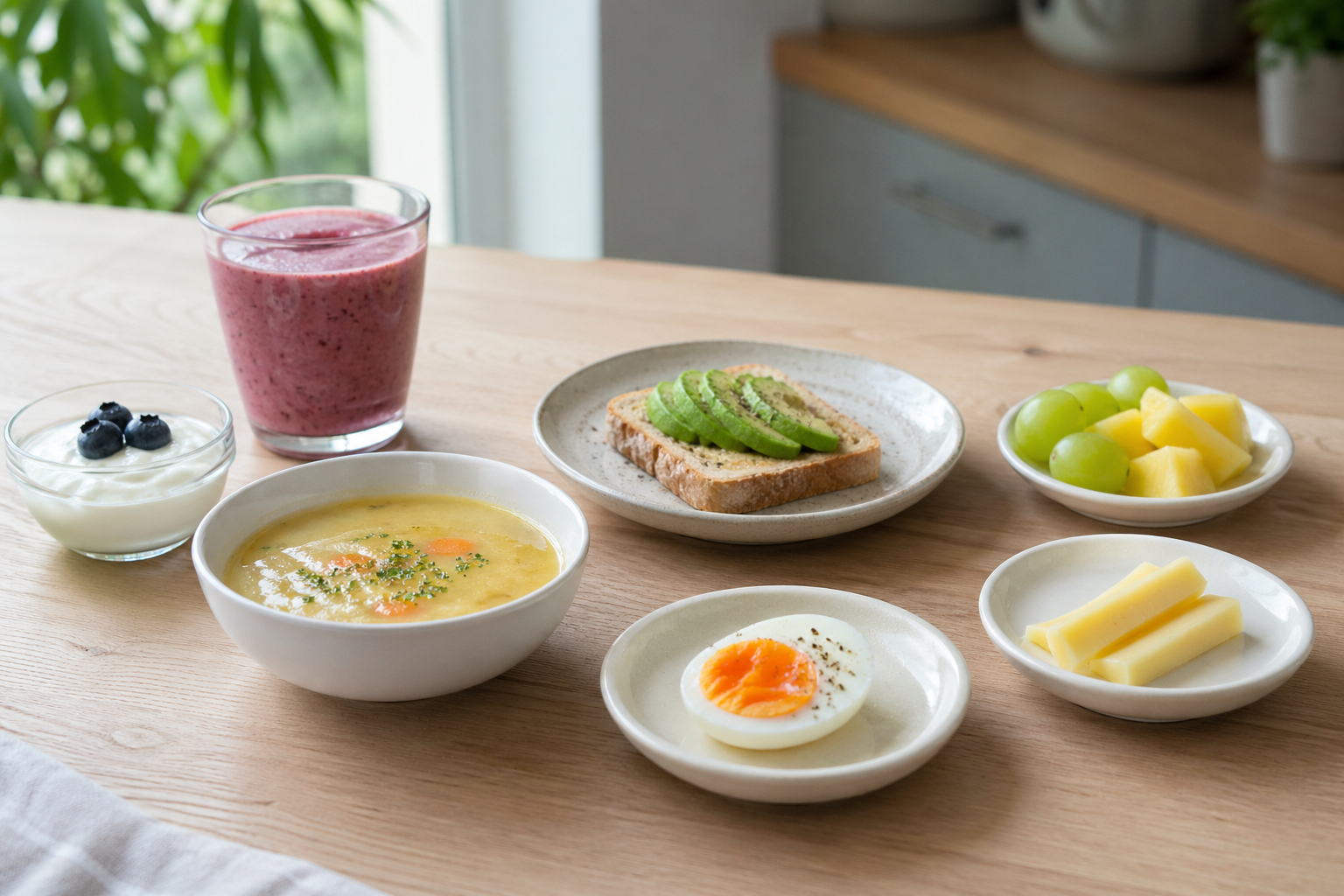
Low appetite is common during cancer treatment, and it is usually easier to work with it than against it. Trying to force three full meals often backfires, especially when nausea, early fullness, taste change, constipation, sore mouth, or fatigue are part of the picture.
A more useful goal is to keep intake going in smaller, easier moments through the day. NCI and other cancer-support resources commonly recommend small frequent meals, higher-protein and higher-calorie choices, and fluids mostly between meals when feeling full quickly is part of the problem.
This article is for general information. It does not replace advice from your oncology team. If symptoms stop you from eating or drinking, or if weight is falling, ask for help early.
Start with timing and portion size
When appetite is low, smaller meals or snacks every 2 to 3 hours are often easier than waiting for normal hunger to return. You do not need to “save up” for a big meal.
It can also help to eat at the time of day when appetite is strongest. For some people that is breakfast; for others it is late evening. Use the window that works rather than aiming for a perfect schedule.
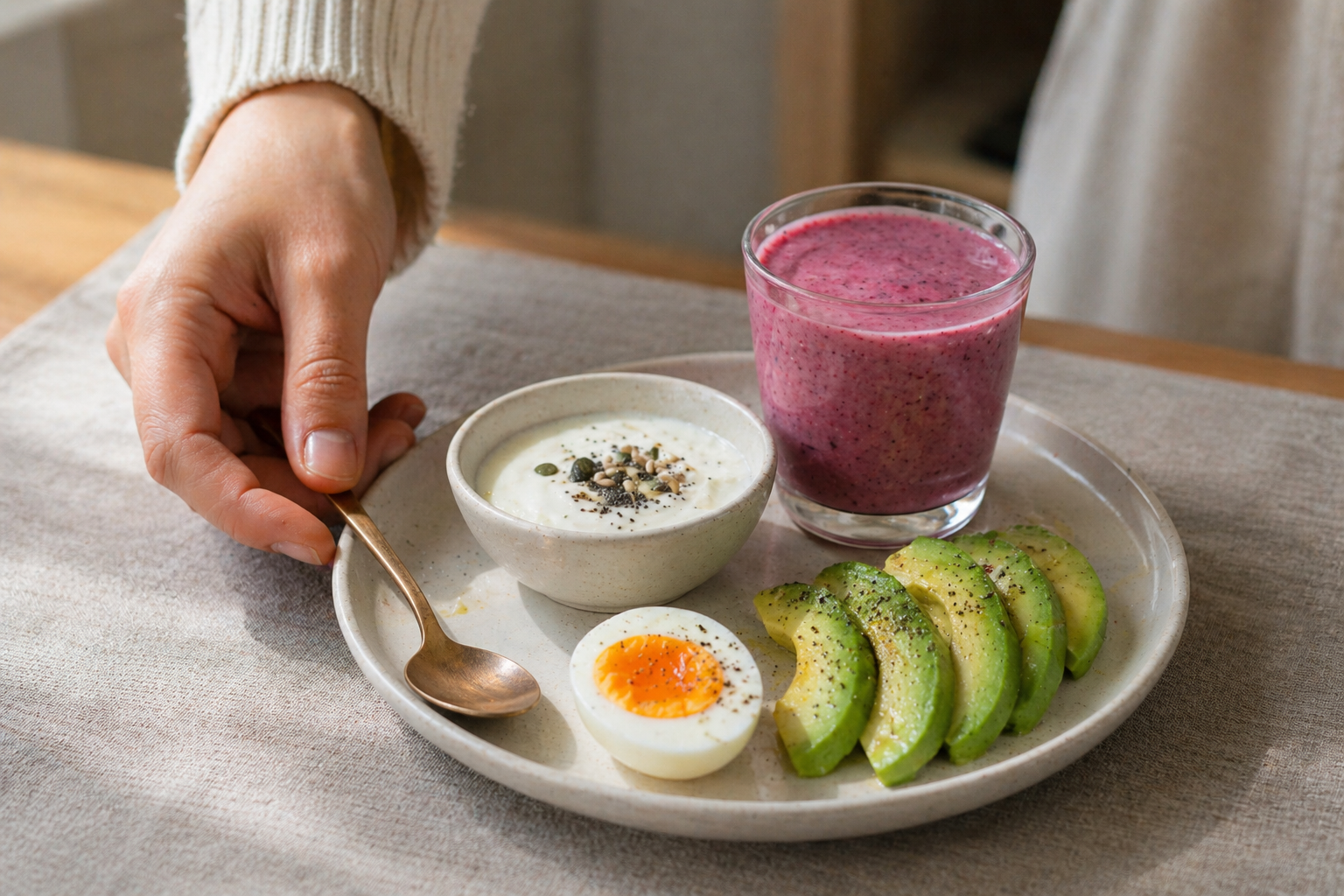
AI-generated image created with ChatGPT / OpenAI DALL·E. For illustrative purposes only.
Make each bite count
If volume is limited, foods need to do more work. NCI and ACS materials both emphasize choosing foods that are higher in protein and calories when appetite is poor.
- Start meals with protein when you can, such as eggs, yogurt, cheese, soft fish, chicken, tofu, beans, or nut butter.
- Add calories and protein to foods you already tolerate: cheese, olive oil, yogurt, milk powder, cream, avocado, nut butter, or sauces.
- Use easy foods without much prep on hard days, such as pudding, yogurt, soups, smoothies, cottage cheese, crackers with cheese, or toast with peanut butter.
- Repeat foods that work. Variety can come later.
With low appetite, the best meal is often the one that feels possible, not the one that looks ideal.
Use drinks strategically
If drinking with meals makes you feel full too quickly, try taking only small sips while eating and having more fluids between meals. That strategy is specifically recommended in NCI guidance for appetite loss and early satiety.
Milkshakes, smoothies, soups, and oral nutrition supplements can also help on days when solid food feels unappealing. They are usually most useful as support, not as a sign that you have somehow “failed” to eat normally.
Look for the blocker behind poor intake
Low appetite is often a signal rather than the whole problem. Poor intake may improve more once the driver is treated.
- Nausea or reflux may make food sound worse than it usually would.
- Constipation can flatten appetite and increase fullness.
- Sore mouth, dry mouth, or swallowing difficulty can make normal textures unrealistic.
- Taste and smell changes can make familiar foods suddenly unpleasant.
- Fatigue can reduce the energy needed to shop, cook, and eat.
If one of those is active, ask for symptom treatment at the same time as nutrition advice.
When to ask for more support Contact your care team sooner if you are eating very little for more than a day or two, losing weight, feeling weak or dizzy, struggling with fluids, or missing medicines because eating and drinking have become too difficult.
When to ask for more support
Ask about a dietitian referral if appetite stays low, weight is dropping, or you are relying on only a few foods. That is also the right time to ask whether an oral nutrition supplement, symptom review, or swallowing review would help.
Getting help early is usually easier than trying to recover after intake has already fallen for weeks.
Frequently asked questions
More often is usually easier. Small frequent meals or snacks are commonly recommended when appetite is poor.
Soft, familiar, higher-protein or higher-calorie foods are often easiest, such as yogurt, eggs, soups, smoothies, milkshakes, cheese, nut butters, or oral nutrition supplements.
If fluids make you feel full quickly, many people do better drinking more between meals and taking only small sips during meals.
They are often useful when solid intake is low, weight is falling, or symptoms make regular meals unrealistic for a period of time.