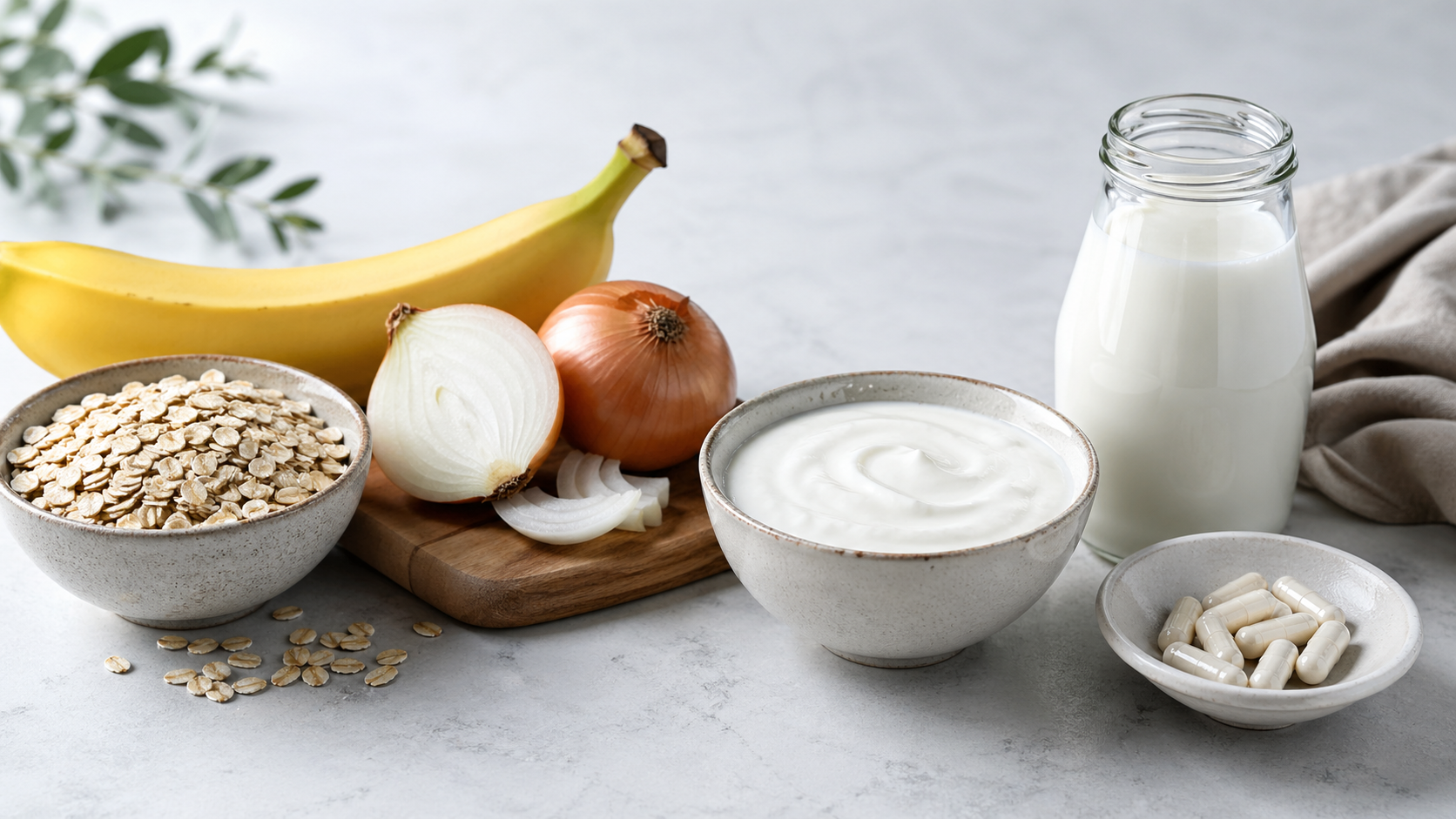
Prebiotics and probiotics are often mentioned together, but they are not interchangeable terms and they do different jobs in the gut.
The shortest version is this: probiotics are live microorganisms with a health benefit in adequate amounts, while prebiotics are substrates that selected microorganisms can use in ways that benefit health.
This article is for general information. It does not replace advice from your oncology team. If your symptoms change, become hard to manage, or stop you from eating or drinking, speak with a clinician promptly.
What a probiotic is
A probiotic is a live microorganism that has been shown to provide a health benefit when used in adequate amounts. That is more specific than simply saying “friendly bacteria.”
The useful follow-up questions are usually which strain, at what dose, and with what evidence. A product is not defined as probiotic only because it is alive.
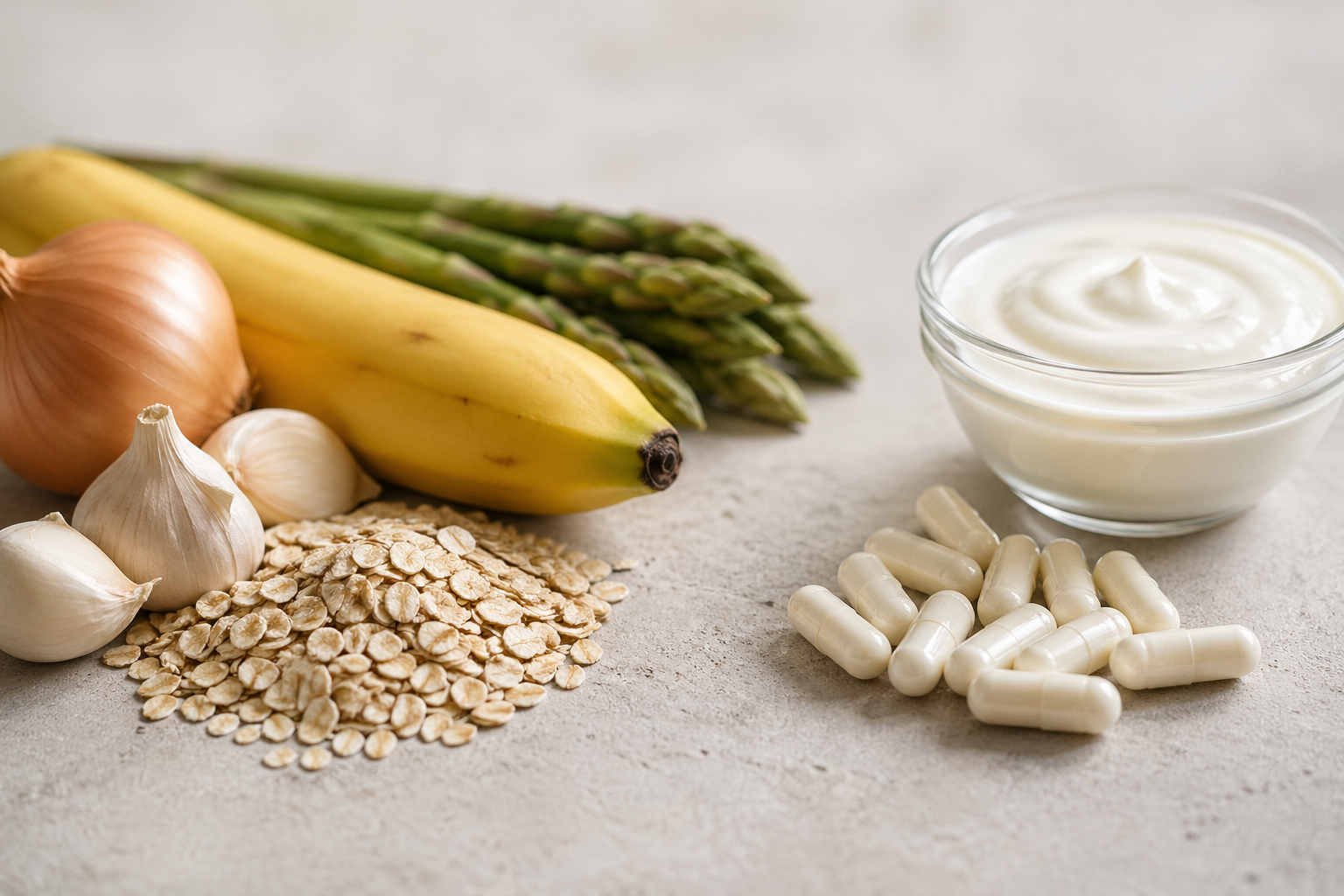
AI-generated image created with ChatGPT / OpenAI DALL·E. For illustrative purposes only.
What a prebiotic is
A prebiotic is a substrate that selected microorganisms can use in a way that benefits health. In practice, many prebiotics are specific fibers or fiber-like ingredients.
A prebiotic is not a live microorganism. It is more like a fuel source or ingredient that supports certain microbes in the gut environment.
Probiotics are the microbes. Prebiotics are the substances that help selected microbes do useful work.
Does inulin count as a prebiotic?
Yes. Inulin is one of the better-known prebiotic fibres. It is often used in foods and supplements because it can be selectively used by certain gut microbes.
It is still worth remembering that not every fiber is automatically a prebiotic, and not every person tolerates every prebiotic equally well. Some people notice gas or bloating if they increase prebiotic fiber quickly.
Why prebiotics and probiotics are often paired
They are often paired because one introduces live microorganisms and the other can help support selected microbes in the gut environment. That pairing can make intuitive sense in gut-focused nutrition.
Still, the presence of both on a label does not automatically prove a meaningful benefit. The ingredient details, dose, and evidence still matter.
What to look for on labels
- For probiotics, look for genus, species, strain, CFU, and storage or use-by information.
- For prebiotics, look for the exact ingredient and how many grams are in one serving.
- A “microbiome support” claim does not tell you whether the product is prebiotic, probiotic, or both.
- During active cancer treatment, ask whether the product fits your current symptoms and care plan.
A useful reminder A prebiotic and a probiotic are not interchangeable terms, and not every fermented food is a probiotic.
Frequently asked questions
A probiotic is a live microorganism that has been shown to provide a health benefit when consumed or used in adequate amounts.
A prebiotic is a substrate that selected microorganisms can use in a way that benefits health. Many prebiotics are specific fibers or fiber-like compounds.
Yes. Inulin is a well-known prebiotic fiber, although tolerance varies and not all fibers are automatically prebiotics.
No. Some fermented foods contain live microbes, but they are not automatically probiotics unless the exact organisms and health benefit criteria are met.
Sources
- NCCIH: Probiotics – usefulness and safety
- ODS: Probiotics – consumer fact sheet
- ISAPP: Prebiotic definition updated by expert consensus
- ISAPP: Probiotics topic overview
Medical disclaimer: This article is for general informational purposes only. It does not constitute medical advice and is not a substitute for professional guidance from a qualified clinician. If you have questions about your own symptoms or treatment, speak with your oncology team or a registered dietitian.